image from : www.boston25news.com
In the pursuit of peak physical and mental condition, few activities offer the profound, multifaceted benefits of running. Far from being merely a tool for weight loss or athletic competition, running stands as a core pillar of preventative healthcare and a crucial component of cognitive resilience. For professionals, executives, and anyone focused on maximizing their long-term efficiency and reducing high-cost health risks, incorporating running into one’s routine is not just exercise—it’s a strategic life investment.
I. Cardiovascular Mastery: Optimizing the Engine
The primary and most widely celebrated benefit of running is its powerful impact on the cardiovascular system. Running is a high-yield aerobic activity that demands efficient oxygen utilization, leading to systemic health improvements.
Enhancing Cardiac Efficiency
Regular running strengthens the heart muscle, allowing it to pump blood more efficiently. This translates directly into a lower resting heart rate (RHR), which is a key biometric marker associated with increased longevity and reduced strain on the heart over a lifetime.
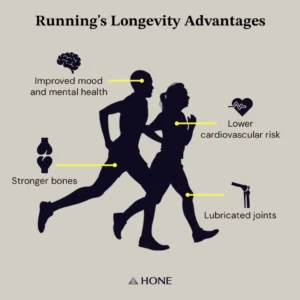
- Risk Mitigation: Consistent running dramatically lowers the risk factors for major chronic diseases, including hypertension, Type 2 diabetes, and coronary artery disease (CAD). It improves cholesterol profiles by elevating levels of protective HDL (High-Density Lipoprotein) cholesterol.
- Vascular Health: Running promotes the dilation and elasticity of blood vessels, ensuring optimal circulation and reducing the likelihood of arterial stiffness, a common precursor to cardiovascular events.
Source : honehealth.com
II. The Metabolic Dividend: Sustainable Energy Management
Running provides a powerful stimulus to the body’s metabolic framework, making it an essential tool for sustainable weight management and energy balance.
Accelerated Fat Oxidation
While all exercise burns calories, long-duration running trains the body to become highly efficient at fat oxidation—burning stored fat for fuel. This is particularly beneficial for improving body composition and achieving a lasting reduction in visceral fat, the dangerous fat stored around internal organs.
- Insulin Sensitivity: Regular physical activity, particularly running, significantly enhances insulin sensitivity. This is critical for regulating blood sugar levels and preventing the onset of insulin resistance, offering a powerful defense against metabolic syndrome.
III. The Cognitive Edge: Running for Brain Health
The benefits of running extend far beyond the physical; they directly impact neurological health, creativity, and stress management, making it an indispensable tool for high-performing individuals.
Neurogenesis and Mood Regulation
During and after a run, the body releases a cascade of beneficial chemicals, including endorphins and endocannabinoids, which are responsible for the famed “runner’s high.”
- Enhanced Focus: Running increases the production of Brain-Derived Neurotrophic Factor (BDNF), a protein often nicknamed “Miracle-Gro for the brain.” BDNF supports the growth of new neurons (neurogenesis) and improves the function of existing ones, particularly in the hippocampus—the brain region critical for memory and learning.
- Stress Reduction: The rhythmic nature of running is a highly effective physiological outlet for stress. It lowers levels of the stress hormone cortisol and provides a meditative release, boosting mental clarity and providing a fresh perspective for problem-solving.
IV. Musculoskeletal Resilience and Bone Density
Counterintuitively, the high-impact nature of running is key to building durable and resilient musculoskeletal health.
- Bone Strengthening: Running is a weight-bearing exercise. The mechanical stress placed on the bones stimulates osteoblasts (bone-forming cells) to lay down new bone tissue. This mechanical loading is crucial for increasing bone mineral density (BMD), offering a potent strategy for preventing osteoporosis and fractures later in life.
- Joint Protection: While often blamed for joint wear, proper running form strengthens the muscles, tendons, and ligaments surrounding the joints (like the knees and hips), providing dynamic support that stabilizes and protects them, provided injury prevention protocols are followed.
Conclusion: The ROI of Running
In a world defined by demanding schedules and increasing complexity, the time dedicated to running is not a cost—it is an investment with exponential returns. It is the most accessible, high-impact tool for simultaneously strengthening the heart, optimizing metabolism, sharpening cognitive function, and securing long-term musculoskeletal health. For those seeking to secure their physical future and maintain a cutting-edge in their professional life, running provides the foundational vitality required to sustain peak performance across all domains.