image from : www.theguardian.com
In an era of complex fitness routines and high-intensity demands, the plank stands out as an exercise defined by its elegant simplicity and profound efficacy. Far more than a mere core workout, the daily execution of the plank is a strategic practice that delivers exceptional returns on physical stability, posture correction, and long-term functional health. For individuals prioritizing efficiency, injury prevention, and sustained performance, integrating the plank protocol is a non-negotiable step toward total-body structural resilience.
I. Core Stability: The Foundation of Functional Strength
The core is the body’s central powerhouse, acting as the bridge between the upper and lower body. The plank, an isometric hold, is arguably the most effective way to engage the entire core musculature simultaneously.
Engaging the Deep Stabilizers
Unlike traditional crunches that primarily work the superficial rectus abdominis (the “six-pack” muscle), the plank targets the deep intrinsic stabilizers:
- Transversus Abdominis (TVA): The “internal corset” that wraps around the torso. Strengthening the TVA is crucial for compressing the abdomen and protecting the spine.
- Obliques (Internal and External): Essential for anti-rotational stability, preventing excessive twisting and strain on the lower back during dynamic movements.
- Gluteal Muscles and Hip Flexors: The plank seamlessly links the lower body to the core, creating a rigid, integrated unit necessary for all athletic and daily functional movements.
By strengthening this functional foundation, the plank directly mitigates the risk of common, costly musculoskeletal injuries.
II. Postural Correction: Counteracting the Desk-Bound Lifestyle
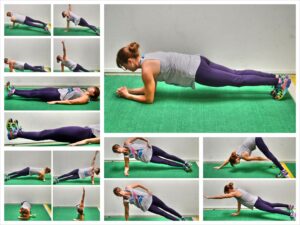
Source : redefiningstrength.com
The modern professional life is often characterized by prolonged sitting, leading to hunched shoulders, forward head posture, and chronic lower back pain. The plank is a potent antidote to these detrimental habits.
Spinal Alignment and Ergonomics
The correct plank form requires the spine to be held in a neutral position, forcing the core muscles to support the torso against gravity. Daily practice teaches the body to maintain this proper alignment automatically, even when you are not actively exercising.
- Reduced Back Pain: A weakened core is the leading cause of chronic lower back pain. By building strength around the lumbar spine, the plank acts as a protective shield, absorbing stress and reducing compressive forces on the vertebral discs.
- Improved Shoulder Girdle Stability: The plank also engages the serratus anterior and rhomboids, muscles vital for retracting and stabilizing the shoulder blades, directly combating the rounded shoulder posture associated with long hours at a desk.
III. Metabolic and Cognitive Efficiency
Though a static exercise, the plank’s engagement of multiple large muscle groups contributes to enhanced overall metabolic health.
Sustained Caloric Expenditure
While a short plank session won’t rival a marathon, the intense activation of numerous muscles simultaneously boosts the body’s metabolic rate, ensuring a higher baseline caloric expenditure throughout the day.
Mental Fortitude and Focus
Holding a plank requires significant mental discipline and perseverance. Daily practice in sustaining a difficult static posture builds mental toughness, improving an individual’s ability to maintain focus and tolerate discomfort—skills highly transferable to demanding professional or personal environments. The concentration required serves as a brief, effective form of mindfulness.
IV. Adaptability and Progression: A Minimalist Tool
One of the plank’s key advantages is its adaptability. It requires zero equipment and minimal space, making it a perfect exercise for daily integration, whether at home, in the office, or while traveling.